Terahertz Scanning of Cultural Relics

Aug 15, 2025 By

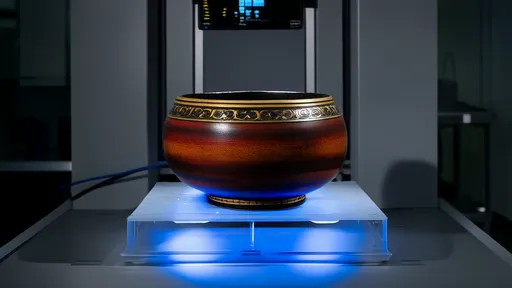
The field of cultural heritage preservation has entered a new era with the advent of terahertz (THz) scanning technology. This cutting-edge method is revolutionizing how archaeologists, conservators, and historians examine fragile artifacts without causing any damage. Unlike traditional X-rays or infrared imaging, terahertz waves occupy a unique region of the electromagnetic spectrum, offering unprecedented clarity and depth in non-invasive analysis.

Museums and research institutions worldwide are increasingly adopting terahertz scanners to peer beneath the surface of ancient objects. The technology works by emitting short pulses of terahertz radiation—between microwave and infrared frequencies—which penetrate various materials differently. As these pulses reflect off internal structures, sophisticated detectors create detailed cross-sectional images revealing hidden layers, repairs, or even previously unknown inscriptions.

What makes terahertz imaging particularly remarkable is its ability to distinguish between materials that appear identical to the naked eye or under other imaging techniques. For instance, conservators at the Louvre recently used THz scanning to differentiate between original paint layers and later restorations on a 14th-century altarpiece. The system clearly showed where Renaissance-era conservators had touched up the work, enabling accurate preservation decisions without removing a single pigment particle.

The British Museum's ongoing project with terahertz scanners has uncovered fascinating details about Egyptian burial artifacts. Many mummy wrappings contain amulets and jewels placed between linen layers—items completely invisible in standard CT scans due to the wrappings' density. THz waves, however, pass through these fibrous materials while bouncing off metallic and mineral inclusions, creating a map of hidden treasures. This capability is transforming our understanding of ancient funerary practices.

Beyond mere discovery, terahertz technology provides crucial information about an object's condition. The waves detect microscopic cracks, moisture content, and material degradation invisible to conservators. This allows for preventive measures before damage becomes visible. At the Vatican Archives, THz scanners identified parchment documents at risk of crumbling from within due to ancient ink corrosion—saving texts that would have been lost within decades.

One groundbreaking application involves illuminated manuscripts. The intense colors in medieval texts often contain rare pigments that degrade over time. Terahertz imaging helps identify which pages need specialized lighting conditions by mapping pigment distribution at a molecular level. The Bodleian Library has used this approach to develop customized display cases that minimize light exposure to vulnerable areas while keeping other sections visible.

The technology isn't limited to organic materials like wood, paper, or textiles. Recent experiments at MIT have successfully applied terahertz scanning to ancient metallic objects, revealing manufacturing techniques. A scan of a Bronze Age dagger showed distinct THz reflections indicating where the metal had been folded during forging—a detail impossible to see with conventional metallography without destructive sampling.

Perhaps most exciting is terahertz imaging's potential to decode lost writings. Many ancient documents were scraped clean and reused (palimpsests), with the original text assumed lost forever. However, different inks penetrate parchment fibers to varying depths. THz scans can detect these depth variations, allowing researchers to reconstruct erased texts. A team in Greece recently recovered 70% of a previously unknown Aristotelian treatise hidden beneath a medieval prayer book using this method.

Despite its promise, terahertz scanning faces challenges. The equipment remains expensive, requiring specialized lasers and detectors. Additionally, interpreting the complex data requires trained experts—a skill set still rare in the conservation community. However, as the technology matures and becomes more accessible, it's poised to become as fundamental to artifact analysis as radiocarbon dating became in the 20th century.

Several startups are now developing portable THz scanners that could bring this technology to archaeological digs worldwide. Imagine uncovering a Roman villa and immediately scanning fresco fragments to determine which require urgent stabilization—all before transporting delicate finds to laboratories. This real-time analysis could prevent countless artifacts from deteriorating during excavation and transit.

The ethical implications are equally profound. Many indigenous communities object to destructive testing of sacred objects. Terahertz scanning offers a respectful alternative for studying ceremonial items while preserving their physical and spiritual integrity. The National Museum of the American Indian has begun using THz technology to examine ritual objects in consultation with tribal elders, creating a new model for collaborative research.

As terahertz technology evolves, its resolution improves exponentially. Early systems could only distinguish features several millimeters apart. The latest generation achieves micron-level precision, enabling the study of individual brushstrokes in Old Master paintings or tool marks on prehistoric carvings. This granularity provides art historians with unprecedented insights into creative processes across civilizations.

Looking ahead, researchers anticipate combining terahertz data with artificial intelligence for automated artifact analysis. Machine learning algorithms trained on thousands of THz scans could instantly identify material compositions, manufacturing periods, or even workshops of origin. Such systems might one day provide instant authentication for disputed artworks or detect forgeries with superhuman accuracy.

The marriage of advanced physics and cultural preservation through terahertz scanning represents more than technical achievement—it's a philosophical shift in how we engage with humanity's material legacy. By revealing hidden histories without altering their physical vessels, this technology ensures future generations can make their own discoveries in artifacts we study today. As the famous adage adapted for the digital age might go: True preservation means leaving no trace, while seeing everything.
Recommend Posts
IT

Self-Powered Ocean Sensors

By /Aug 15, 2025

The vast expanse of the world’s oceans remains one of the most critical frontiers for scientific exploration and environmental monitoring. Yet, powering the sensors that collect this invaluable data has long been a challenge. Traditional battery-powered systems are limited by their lifespan and the logistical difficulties of replacement in remote or deep-sea environments. Enter the emerging field of self-powered marine sensors—a technological leap that could revolutionize how we study and protect our oceans.
IT

New Breakthroughs of Transformer Models in Gene Sequence Prediction

By /Aug 26, 2025

In a groundbreaking development that blurs the lines between computational biology and artificial intelligence, researchers have successfully adapted transformer architectures—the very foundation behind revolutionary language models like GPT—to predict gene sequences with unprecedented accuracy. This technological leap is not merely an incremental improvement but represents a paradigm shift in how scientists approach genomic research, potentially accelerating discoveries in personalized medicine, evolutionary biology, and therapeutic development.
IT

How Federated Learning Cracks the Data Silo Dilemma in Medical Imaging Diagnosis

By /Aug 26, 2025

The healthcare industry stands at a critical juncture where artificial intelligence promises revolutionary advancements in medical imaging diagnostics, yet a formidable barrier persists: the data silo dilemma. Hospitals and research institutions worldwide possess vast repositories of medical images, but privacy regulations, competitive interests, and technical challenges keep these valuable datasets isolated. This fragmentation severely limits the potential of AI models that thrive on large, diverse datasets for accurate diagnosis and pattern recognition.
IT

Virtual Power Plant Transaction Delay

By /Aug 15, 2025

The concept of virtual power plants (VPPs) has gained significant traction in recent years as a cornerstone of modern energy systems. By aggregating distributed energy resources (DERs) such as solar panels, wind turbines, and battery storage, VPPs promise to enhance grid stability, reduce costs, and accelerate the transition to renewable energy. However, the implementation of these systems has not been without challenges. One of the most pressing issues currently facing the industry is the problem of transaction delays in VPP operations, which threatens to undermine their efficiency and reliability.
IT

Digital Twin-based Power Grid Fault Localization

By /Aug 15, 2025

The concept of digital twins has rapidly evolved from a theoretical idea to a transformative technology across industries. In the energy sector, digital twins are revolutionizing how power grids are monitored, maintained, and repaired. One of the most promising applications is in fault localization within electrical grids, where even minor disruptions can cascade into widespread outages. By creating a virtual replica of the physical grid, operators can simulate, predict, and pinpoint faults with unprecedented accuracy.
IT

Ultra-Fusion GPU Scheduling

By /Aug 15, 2025

The rapid evolution of enterprise IT infrastructure has ushered in a new era of computational efficiency, with hyperconverged infrastructure (HCI) emerging as a game-changer. Among its most transformative capabilities is GPU scheduling—a feature that is redefining how businesses leverage accelerated computing. By seamlessly integrating GPU resources into a hyperconverged environment, organizations are unlocking unprecedented performance for AI, machine learning, and high-performance computing workloads.
IT

Edge Device Protection

By /Aug 15, 2025

As the Internet of Things (IoT) continues its explosive growth, edge devices have become both the backbone and the Achilles' heel of modern digital infrastructure. These devices, ranging from industrial sensors to smart home assistants, process data closer to its source than ever before. Yet this very advantage creates unique security challenges that traditional IT security models fail to address adequately.
IT

How Do Multimodal Large Models Understand Humor and Irony?

By /Aug 26, 2025

In the rapidly evolving landscape of artificial intelligence, few challenges have proven as elusive and fascinating as teaching machines to grasp the nuances of human humor and irony. Multimodal large models, which integrate text, image, audio, and sometimes even video data, are at the forefront of this ambitious endeavor. Unlike their unimodal predecessors, these advanced systems are designed to process and correlate information across multiple sensory channels, mimicking the way humans naturally perceive and interpret the world. This capability is particularly crucial when it comes to understanding humor and sarcasm—complex communicative acts that often rely on a delicate interplay between context, tone, facial expressions, and cultural knowledge.
IT

Terahertz Scanning of Cultural Relics

By /Aug 15, 2025

The field of cultural heritage preservation has entered a new era with the advent of terahertz (THz) scanning technology. This cutting-edge method is revolutionizing how archaeologists, conservators, and historians examine fragile artifacts without causing any damage. Unlike traditional X-rays or infrared imaging, terahertz waves occupy a unique region of the electromagnetic spectrum, offering unprecedented clarity and depth in non-invasive analysis.
IT

Microbial Fuel Cell

By /Aug 15, 2025

The concept of turning organic matter into electricity might sound like science fiction, but microbial fuel cells (MFCs) are making it a reality. These innovative bioelectrochemical systems leverage the metabolic activity of bacteria to produce energy while simultaneously treating wastewater. Unlike traditional fuel cells that rely on chemical reactions, MFCs operate through biological processes, offering a sustainable alternative for power generation and environmental remediation.
IT

Self-Healing Circuit Monitoring

By /Aug 15, 2025

The concept of self-repairing technology has moved from science fiction to laboratory reality in the field of electronics. Researchers and engineers are making significant strides in developing circuits that can detect and repair their own damage without human intervention. This emerging field of self-healing circuit monitoring promises to revolutionize everything from consumer electronics to critical infrastructure systems.
IT

Optoelectronic Co-packaging for Thermal Management

By /Aug 15, 2025

The rapid evolution of high-performance computing and data centers has brought thermal management to the forefront of technological challenges. Among the emerging solutions, co-packaged optics with integrated thermal management stands out as a promising approach to address the escalating heat dissipation demands in next-generation systems. As data rates soar and component densities increase, traditional cooling methods struggle to keep pace, making innovative solutions like photonic-electronic co-packaging with advanced cooling mechanisms critical for sustaining performance and reliability.
IT

Millimeter-Wave Localization for Underground Applications: Anti-Interference Techniques

By /Aug 15, 2025

The mining and tunneling industries have long struggled with the challenges of accurate positioning in underground environments. Traditional radio frequency-based systems often fail to deliver reliable performance due to signal interference, multipath effects, and the complex geometry of underground spaces. However, recent advancements in millimeter-wave (mmWave) technology are offering a promising solution to these persistent problems.
IT

Calibration of Electronic Skin Signals

By /Aug 15, 2025

The field of wearable technology has witnessed remarkable advancements in recent years, with electronic skin (e-skin) emerging as a groundbreaking innovation. These ultra-thin, flexible devices mimic the properties of human skin, enabling seamless integration with the body to monitor vital signs, detect environmental changes, and even restore sensory functions. However, the accuracy and reliability of e-skin signals heavily depend on precise calibration techniques, a challenge that researchers are actively addressing to unlock the full potential of this technology.
IT

Neuromorphic Olfactory Perception

By /Aug 15, 2025

The field of neuromorphic olfaction represents a groundbreaking convergence of neuroscience, engineering, and artificial intelligence, aiming to replicate the human sense of smell in machines. Unlike traditional sensors that rely on chemical reactions, neuromorphic systems draw inspiration from the biological olfactory system, mimicking its structure and function to achieve unprecedented accuracy and adaptability. This emerging technology promises to revolutionize industries ranging from healthcare to environmental monitoring, offering solutions that were once deemed impossible.
IT

Immersion Cooling Fluid Recycling

By /Aug 15, 2025

As data centers continue to expand in both size and computational power, the demand for efficient cooling solutions has never been higher. Traditional air-cooling methods are increasingly being replaced by more advanced techniques, with immersion cooling emerging as a frontrunner. This method, which involves submerging hardware in a thermally conductive dielectric fluid, offers superior heat dissipation compared to conventional systems. However, one critical aspect that often goes overlooked is the reclamation and recycling of these specialized cooling fluids.
IT

AI-assisted Discovery of New Materials: The Integration of High-throughput Computing and Machine Learning

By /Aug 26, 2025

The discovery of new materials has historically been a slow, labor-intensive process, often driven by serendipity and trial-and-error experimentation. For centuries, scientists have synthesized and tested countless compounds, gradually building the material foundation of modern technology. However, the traditional approach is reaching its limits in an era demanding increasingly specialized and high-performance materials. The convergence of artificial intelligence, particularly machine learning, with high-throughput computational methods is now revolutionizing this field, creating a paradigm shift in how we discover and design novel materials.
IT

Random Access in DNA Data Storage

By /Aug 15, 2025

The concept of using DNA as a storage medium has long fascinated scientists and technologists alike. Unlike traditional storage methods, DNA offers unparalleled density and longevity, capable of preserving information for thousands of years under the right conditions. However, one of the most significant challenges in this field has been the ability to randomly access specific data within a DNA storage system. Recent advancements are now bringing us closer to overcoming this hurdle, opening up new possibilities for practical applications.
IT

Digital Taste Encoding

By /Aug 15, 2025

Imagine a world where you could download the taste of a gourmet meal, share the sensation of your favorite cocktail with a friend across the globe, or even customize flavors in real-time like adjusting a music equalizer. This isn't science fiction—it's the emerging frontier of digital taste encoding, a technological breakthrough that could fundamentally alter how we experience food and beverages.
IT

Edge AI Inference Chip Energy Efficiency Ratio Competition: Latest Benchmarking Results

By /Aug 26, 2025

The landscape of edge AI inference chips is undergoing a seismic shift as manufacturers race to deliver unprecedented energy efficiency. Recent benchmark results from independent testing laboratories reveal startling advancements in performance-per-watt metrics that are reshaping industry expectations and competitive dynamics.