Random Access in DNA Data Storage

Aug 15, 2025 By

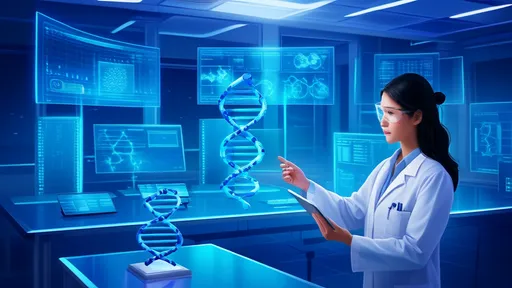
The concept of using DNA as a storage medium has long fascinated scientists and technologists alike. Unlike traditional storage methods, DNA offers unparalleled density and longevity, capable of preserving information for thousands of years under the right conditions. However, one of the most significant challenges in this field has been the ability to randomly access specific data within a DNA storage system. Recent advancements are now bringing us closer to overcoming this hurdle, opening up new possibilities for practical applications.

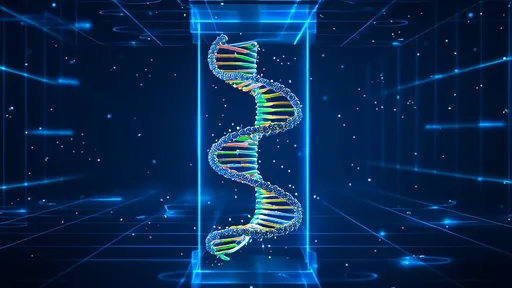
DNA storage operates by encoding digital data into synthetic DNA strands. Each nucleotide—adenine (A), thymine (T), cytosine (C), and guanine (G)—represents binary information, allowing vast amounts of data to be stored in a microscopic space. While writing data to DNA has become increasingly efficient, reading and retrieving specific pieces of information without sequencing the entire DNA pool has remained a complex problem. Traditional sequencing methods are time-consuming and costly, making random access a critical requirement for scalability.

Researchers have been experimenting with various techniques to enable selective retrieval. One promising approach involves the use of unique molecular identifiers (UMIs) or primers that act as bookmarks within the DNA strands. By attaching these markers to specific data segments, scientists can later target and amplify only the desired sequences using polymerase chain reaction (PCR). This method mimics the way a computer retrieves files from a hard drive, skipping irrelevant data and focusing solely on the requested information.

Another breakthrough comes from the integration of CRISPR-Cas systems. Originally known for its gene-editing capabilities, CRISPR has been repurposed to locate and extract specific DNA sequences. By designing guide RNAs that match the target data, researchers can direct the Cas enzyme to cut and isolate the relevant segments. This technique not only improves retrieval accuracy but also reduces the need for full sequencing, making the process faster and more cost-effective.

The implications of random access in DNA storage are profound. Industries dealing with massive datasets, such as genomics, cloud computing, and archival preservation, stand to benefit significantly. Imagine a future where entire libraries of historical records or vast genomic databases are stored in test tubes, with the ability to retrieve any piece of information in seconds. The potential for reducing physical storage space and energy consumption is staggering, especially as the world grapples with the limitations of conventional data centers.

Despite these advancements, challenges remain. Error rates in DNA synthesis and sequencing, though decreasing, still pose risks to data integrity. Additionally, the current cost of DNA storage, while dropping, remains prohibitive for widespread adoption. However, as the technology matures and economies of scale come into play, these barriers are expected to diminish. The convergence of biotechnology and information technology is accelerating, and DNA storage could soon transition from a laboratory curiosity to a mainstream solution.

Beyond technical improvements, ethical and regulatory considerations must also be addressed. Storing sensitive or personal data in DNA raises questions about security and privacy. Unlike digital encryption, which can be updated or modified, DNA-based data is static and difficult to alter once synthesized. Ensuring robust safeguards against unauthorized access or misuse will be crucial as the technology evolves.

The race to perfect DNA storage is far from over, but the progress in random access capabilities marks a pivotal milestone. As researchers refine these techniques, the dream of using DNA as a universal storage medium inches closer to reality. The fusion of biology and computing holds the promise of revolutionizing how we preserve and interact with information, offering a glimpse into a future where data is as enduring as life itself.
Recommend Posts
IT

Self-Powered Ocean Sensors

By /Aug 15, 2025

The vast expanse of the world’s oceans remains one of the most critical frontiers for scientific exploration and environmental monitoring. Yet, powering the sensors that collect this invaluable data has long been a challenge. Traditional battery-powered systems are limited by their lifespan and the logistical difficulties of replacement in remote or deep-sea environments. Enter the emerging field of self-powered marine sensors—a technological leap that could revolutionize how we study and protect our oceans.
IT

New Breakthroughs of Transformer Models in Gene Sequence Prediction

By /Aug 26, 2025

In a groundbreaking development that blurs the lines between computational biology and artificial intelligence, researchers have successfully adapted transformer architectures—the very foundation behind revolutionary language models like GPT—to predict gene sequences with unprecedented accuracy. This technological leap is not merely an incremental improvement but represents a paradigm shift in how scientists approach genomic research, potentially accelerating discoveries in personalized medicine, evolutionary biology, and therapeutic development.
IT

How Federated Learning Cracks the Data Silo Dilemma in Medical Imaging Diagnosis

By /Aug 26, 2025

The healthcare industry stands at a critical juncture where artificial intelligence promises revolutionary advancements in medical imaging diagnostics, yet a formidable barrier persists: the data silo dilemma. Hospitals and research institutions worldwide possess vast repositories of medical images, but privacy regulations, competitive interests, and technical challenges keep these valuable datasets isolated. This fragmentation severely limits the potential of AI models that thrive on large, diverse datasets for accurate diagnosis and pattern recognition.
IT

Virtual Power Plant Transaction Delay

By /Aug 15, 2025

The concept of virtual power plants (VPPs) has gained significant traction in recent years as a cornerstone of modern energy systems. By aggregating distributed energy resources (DERs) such as solar panels, wind turbines, and battery storage, VPPs promise to enhance grid stability, reduce costs, and accelerate the transition to renewable energy. However, the implementation of these systems has not been without challenges. One of the most pressing issues currently facing the industry is the problem of transaction delays in VPP operations, which threatens to undermine their efficiency and reliability.
IT

Digital Twin-based Power Grid Fault Localization

By /Aug 15, 2025

The concept of digital twins has rapidly evolved from a theoretical idea to a transformative technology across industries. In the energy sector, digital twins are revolutionizing how power grids are monitored, maintained, and repaired. One of the most promising applications is in fault localization within electrical grids, where even minor disruptions can cascade into widespread outages. By creating a virtual replica of the physical grid, operators can simulate, predict, and pinpoint faults with unprecedented accuracy.
IT

Ultra-Fusion GPU Scheduling

By /Aug 15, 2025

The rapid evolution of enterprise IT infrastructure has ushered in a new era of computational efficiency, with hyperconverged infrastructure (HCI) emerging as a game-changer. Among its most transformative capabilities is GPU scheduling—a feature that is redefining how businesses leverage accelerated computing. By seamlessly integrating GPU resources into a hyperconverged environment, organizations are unlocking unprecedented performance for AI, machine learning, and high-performance computing workloads.
IT

Edge Device Protection

By /Aug 15, 2025

As the Internet of Things (IoT) continues its explosive growth, edge devices have become both the backbone and the Achilles' heel of modern digital infrastructure. These devices, ranging from industrial sensors to smart home assistants, process data closer to its source than ever before. Yet this very advantage creates unique security challenges that traditional IT security models fail to address adequately.
IT

How Do Multimodal Large Models Understand Humor and Irony?

By /Aug 26, 2025

In the rapidly evolving landscape of artificial intelligence, few challenges have proven as elusive and fascinating as teaching machines to grasp the nuances of human humor and irony. Multimodal large models, which integrate text, image, audio, and sometimes even video data, are at the forefront of this ambitious endeavor. Unlike their unimodal predecessors, these advanced systems are designed to process and correlate information across multiple sensory channels, mimicking the way humans naturally perceive and interpret the world. This capability is particularly crucial when it comes to understanding humor and sarcasm—complex communicative acts that often rely on a delicate interplay between context, tone, facial expressions, and cultural knowledge.
IT

Terahertz Scanning of Cultural Relics

By /Aug 15, 2025

The field of cultural heritage preservation has entered a new era with the advent of terahertz (THz) scanning technology. This cutting-edge method is revolutionizing how archaeologists, conservators, and historians examine fragile artifacts without causing any damage. Unlike traditional X-rays or infrared imaging, terahertz waves occupy a unique region of the electromagnetic spectrum, offering unprecedented clarity and depth in non-invasive analysis.
IT

Microbial Fuel Cell

By /Aug 15, 2025

The concept of turning organic matter into electricity might sound like science fiction, but microbial fuel cells (MFCs) are making it a reality. These innovative bioelectrochemical systems leverage the metabolic activity of bacteria to produce energy while simultaneously treating wastewater. Unlike traditional fuel cells that rely on chemical reactions, MFCs operate through biological processes, offering a sustainable alternative for power generation and environmental remediation.
IT

Self-Healing Circuit Monitoring

By /Aug 15, 2025

The concept of self-repairing technology has moved from science fiction to laboratory reality in the field of electronics. Researchers and engineers are making significant strides in developing circuits that can detect and repair their own damage without human intervention. This emerging field of self-healing circuit monitoring promises to revolutionize everything from consumer electronics to critical infrastructure systems.
IT

Optoelectronic Co-packaging for Thermal Management

By /Aug 15, 2025

The rapid evolution of high-performance computing and data centers has brought thermal management to the forefront of technological challenges. Among the emerging solutions, co-packaged optics with integrated thermal management stands out as a promising approach to address the escalating heat dissipation demands in next-generation systems. As data rates soar and component densities increase, traditional cooling methods struggle to keep pace, making innovative solutions like photonic-electronic co-packaging with advanced cooling mechanisms critical for sustaining performance and reliability.
IT

Millimeter-Wave Localization for Underground Applications: Anti-Interference Techniques

By /Aug 15, 2025

The mining and tunneling industries have long struggled with the challenges of accurate positioning in underground environments. Traditional radio frequency-based systems often fail to deliver reliable performance due to signal interference, multipath effects, and the complex geometry of underground spaces. However, recent advancements in millimeter-wave (mmWave) technology are offering a promising solution to these persistent problems.
IT

Calibration of Electronic Skin Signals

By /Aug 15, 2025

The field of wearable technology has witnessed remarkable advancements in recent years, with electronic skin (e-skin) emerging as a groundbreaking innovation. These ultra-thin, flexible devices mimic the properties of human skin, enabling seamless integration with the body to monitor vital signs, detect environmental changes, and even restore sensory functions. However, the accuracy and reliability of e-skin signals heavily depend on precise calibration techniques, a challenge that researchers are actively addressing to unlock the full potential of this technology.
IT

Neuromorphic Olfactory Perception

By /Aug 15, 2025

The field of neuromorphic olfaction represents a groundbreaking convergence of neuroscience, engineering, and artificial intelligence, aiming to replicate the human sense of smell in machines. Unlike traditional sensors that rely on chemical reactions, neuromorphic systems draw inspiration from the biological olfactory system, mimicking its structure and function to achieve unprecedented accuracy and adaptability. This emerging technology promises to revolutionize industries ranging from healthcare to environmental monitoring, offering solutions that were once deemed impossible.
IT

Immersion Cooling Fluid Recycling

By /Aug 15, 2025

As data centers continue to expand in both size and computational power, the demand for efficient cooling solutions has never been higher. Traditional air-cooling methods are increasingly being replaced by more advanced techniques, with immersion cooling emerging as a frontrunner. This method, which involves submerging hardware in a thermally conductive dielectric fluid, offers superior heat dissipation compared to conventional systems. However, one critical aspect that often goes overlooked is the reclamation and recycling of these specialized cooling fluids.
IT

AI-assisted Discovery of New Materials: The Integration of High-throughput Computing and Machine Learning

By /Aug 26, 2025

The discovery of new materials has historically been a slow, labor-intensive process, often driven by serendipity and trial-and-error experimentation. For centuries, scientists have synthesized and tested countless compounds, gradually building the material foundation of modern technology. However, the traditional approach is reaching its limits in an era demanding increasingly specialized and high-performance materials. The convergence of artificial intelligence, particularly machine learning, with high-throughput computational methods is now revolutionizing this field, creating a paradigm shift in how we discover and design novel materials.
IT

Random Access in DNA Data Storage

By /Aug 15, 2025

The concept of using DNA as a storage medium has long fascinated scientists and technologists alike. Unlike traditional storage methods, DNA offers unparalleled density and longevity, capable of preserving information for thousands of years under the right conditions. However, one of the most significant challenges in this field has been the ability to randomly access specific data within a DNA storage system. Recent advancements are now bringing us closer to overcoming this hurdle, opening up new possibilities for practical applications.
IT

Digital Taste Encoding

By /Aug 15, 2025

Imagine a world where you could download the taste of a gourmet meal, share the sensation of your favorite cocktail with a friend across the globe, or even customize flavors in real-time like adjusting a music equalizer. This isn't science fiction—it's the emerging frontier of digital taste encoding, a technological breakthrough that could fundamentally alter how we experience food and beverages.
IT

Edge AI Inference Chip Energy Efficiency Ratio Competition: Latest Benchmarking Results

By /Aug 26, 2025

The landscape of edge AI inference chips is undergoing a seismic shift as manufacturers race to deliver unprecedented energy efficiency. Recent benchmark results from independent testing laboratories reveal startling advancements in performance-per-watt metrics that are reshaping industry expectations and competitive dynamics.