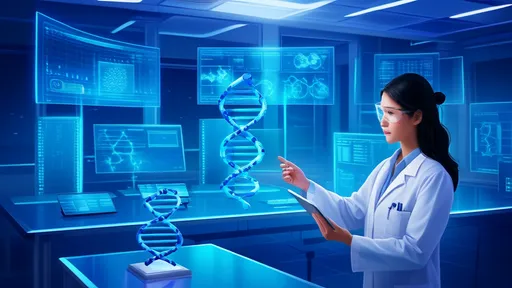
In a groundbreaking development that blurs the lines between computational biology and artificial intelligence, researchers have successfully adapted transformer architectures—the very foundation behind revolutionary language models like GPT—to predict gene sequences with unprecedented accuracy. This technological leap is not merely an incremental improvement but represents a paradigm shift in how scientists approach genomic research, potentially accelerating discoveries in personalized medicine, evolutionary biology, and therapeutic development.
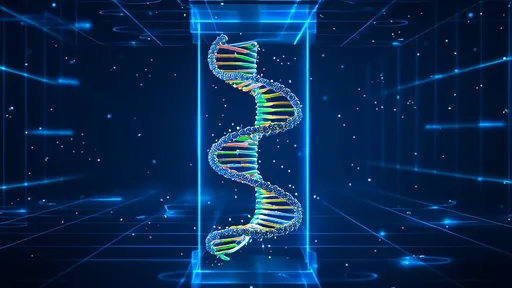
The core innovation lies in treating DNA sequences not as static strings of biochemical data but as a complex language with its own syntax and semantics. Just as transformers process human language by understanding context through self-attention mechanisms, these adapted models analyze nucleotide sequences (A, T, C, G) by capturing long-range dependencies and patterns that were previously undetectable with traditional methods. Early results demonstrate that these models can predict missing segments of genomic sequences, identify regulatory elements with higher precision, and even simulate how mutations might affect gene function—all tasks that were notoriously challenging for conventional algorithms.
What sets this approach apart is its ability to handle the immense scale and complexity of genomic data. Human DNA contains approximately 3 billion base pairs, and traditional machine learning models often struggled with the contextual relationships between distant genetic elements. Transformers, however, excel at drawing connections across vast spans of data. By training on massive datasets comprising entire genomes from diverse species, these models have learned to recognize deep biological patterns, such as how a mutation in one gene might influence the expression of another located far away on the chromosome.
The implications for medical research are profound. For instance, in cancer genomics, where tumors often harbor complex mutations, transformer-based models can help predict which genetic alterations are drivers of disease and which are mere passengers. This could lead to more accurate diagnoses and targeted therapies. Similarly, in rare genetic disorders, these models might identify pathogenic variants that have eluded detection for years, offering hope for faster and more precise genetic counseling.
Beyond healthcare, the technology is poised to revolutionize basic biological research. Evolutionary biologists are using it to reconstruct ancestral gene sequences and understand how certain traits have evolved over millennia. Agricultural scientists are exploring its potential to engineer crop genomes for better yield and resilience against climate change. The versatility of transformer models means they can be fine-tuned for virtually any organism, from bacteria to humans, making them a universal tool in the life sciences arsenal.
However, the adoption of this technology is not without challenges. Training these models requires enormous computational resources and vast amounts of high-quality genomic data, which can be a barrier for smaller research institutions. There are also ethical considerations, particularly around data privacy and the potential for misuse in areas like genetic discrimination. Researchers emphasize the need for robust frameworks to ensure that these powerful tools are used responsibly and equitably.
Despite these hurdles, the pace of progress is staggering. Several research groups have already open-sourced their transformer-based genomic models, fostering collaboration and innovation across the scientific community. Companies specializing in AI and biotechnology are investing heavily in this space, signaling a growing recognition of its commercial and scientific value. As these models continue to evolve, they may soon become as indispensable to geneticists as telescopes are to astronomers—a window into the intricate code of life itself.
Looking ahead, experts predict that transformer models will not only enhance our ability to read genetic sequences but also to write them. This could pave the way for synthetic biology applications, such as designing novel genes or even entire genomes from scratch. While such prospects are still on the horizon, they underscore the transformative potential of this technology. In the words of one leading researcher, We are no longer just decoding life's language—we are learning to speak it fluently.

By /Aug 15, 2025
By /Aug 26, 2025

By /Aug 26, 2025

By /Aug 15, 2025

By /Aug 15, 2025

By /Aug 15, 2025

By /Aug 15, 2025

By /Aug 26, 2025

By /Aug 15, 2025
By /Aug 15, 2025

By /Aug 15, 2025

By /Aug 15, 2025

By /Aug 15, 2025

By /Aug 15, 2025
By /Aug 15, 2025

By /Aug 15, 2025
By /Aug 26, 2025
By /Aug 15, 2025
By /Aug 15, 2025

By /Aug 26, 2025