Imagine a world where you could download the taste of a gourmet meal, share the sensation of your favorite cocktail with a friend across the globe, or even customize flavors in real-time like adjusting a music equalizer. This isn't science fiction—it's the emerging frontier of digital taste encoding, a technological breakthrough that could fundamentally alter how we experience food and beverages.
At its core, digital taste encoding involves translating chemical flavor compounds into digital signals that can be stored, transmitted, and reconstructed. Researchers are developing methods to break down tastes into their fundamental components—sweetness, saltiness, sourness, bitterness, and umami—along with texture and temperature data. These digital "flavor profiles" could then be recreated using advanced culinary devices or even transmitted directly to our nervous systems through specialized interfaces.
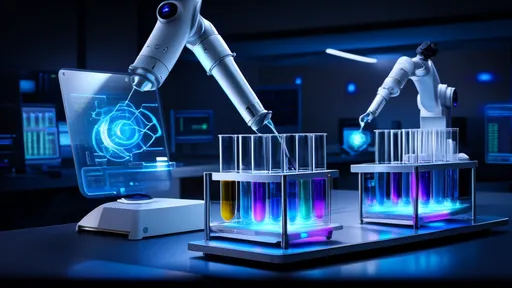
The science behind this innovation draws from multiple disciplines. Chemists map molecular structures of flavor compounds, while neuroscientists study how taste receptors and the brain process these signals. Computer scientists develop algorithms to encode this complex data efficiently. Early prototypes include electronic tongues that can analyze flavors with precision surpassing human capabilities and experimental devices that stimulate taste buds with electrical or thermal patterns.
One particularly promising application lies in healthcare. Patients undergoing chemotherapy often experience taste alterations that lead to nutritional deficiencies. Digital taste encoding could help restore their ability to enjoy food by compensating for these changes. Similarly, individuals with dietary restrictions due to diabetes or hypertension could experience satisfying flavors without the harmful ingredients.
The culinary world stands to be transformed as well. Chefs could create and copyright signature flavor profiles, distributing them globally without physical ingredients. Food companies might offer personalized flavor subscriptions, adjusting products to individual preferences tracked over time. Some visionaries even speculate about "flavor social networks" where users share and rate taste experiences as we currently do with photos or videos.
However, significant challenges remain before digital taste becomes mainstream. The human gustatory system is astonishingly complex, with taste interacting closely with smell, texture, and even auditory cues (think of the crunch of a potato chip). Current technology struggles to replicate this multisensory experience convincingly. There are also ethical questions about manipulating something as fundamental as taste—could it lead to new forms of addiction or unhealthy relationships with food?
As research progresses, we're beginning to see the first commercial applications. Several startups have developed digital seasoning devices that can enhance or modify flavors in real-time using electrode arrays or ultrasonic waves. Military organizations are investigating the technology for improving field rations, while space agencies see potential for making astronaut food more palatable during long missions.
The cultural implications could be profound. Traditional cuisines developed based on locally available ingredients might give way to global flavor libraries accessible anywhere. Entirely new taste experiences impossible to create with natural ingredients might emerge. Some anthropologists worry this could lead to culinary homogenization, while others believe it might actually preserve endangered food traditions by digitizing them before they disappear.
Looking ahead, digital taste encoding represents more than just a novel way to experience food. It challenges our basic assumptions about one of humanity's most fundamental senses. As the technology matures, it will force us to reconsider what "natural" flavor means and how we value authentic culinary experiences in an increasingly digital world. The companies and researchers leading this charge aren't just inventing new gadgets—they're potentially rewriting the rules of human sensation itself.
While widespread adoption may still be years away, the pace of advancement suggests that digitally encoded taste could become part of our daily lives sooner than we expect. The next major computing interface might not be visual or auditory, but gustatory—transforming our tongues into portals for digital information and communication in ways we're only beginning to imagine.
By /Aug 15, 2025
By /Aug 26, 2025
By /Aug 26, 2025
By /Aug 15, 2025
By /Aug 15, 2025
By /Aug 15, 2025
By /Aug 15, 2025
By /Aug 26, 2025
By /Aug 15, 2025
By /Aug 15, 2025
By /Aug 15, 2025
By /Aug 15, 2025
By /Aug 15, 2025
By /Aug 15, 2025
By /Aug 15, 2025
By /Aug 15, 2025
By /Aug 26, 2025
By /Aug 15, 2025
By /Aug 15, 2025
By /Aug 26, 2025