Vacuum Pipeline Logistics: High-Speed Cross-City Delivery System with Maglev Capsules

Jul 28, 2025 By

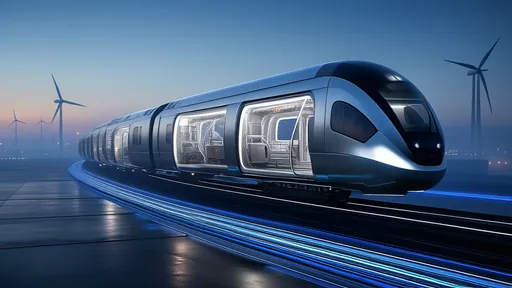
The concept of vacuum tube logistics, once relegated to the realm of science fiction, is now inching closer to reality. Among the most promising developments in this field is the magnetic levitation (maglev) capsule system, designed to revolutionize cross-city delivery. By combining the near-frictionless movement of maglev technology with the resistance-free environment of a vacuum tube, these systems promise unprecedented speed and efficiency in transporting goods. The implications for industries ranging from e-commerce to healthcare are staggering, potentially reshaping how we think about logistics in urban environments.

How It Works: The Science Behind the Speed

At the heart of this system lies a simple yet powerful principle: removing air resistance and friction. Traditional transportation methods, whether by road or rail, are limited by these two factors. Even the fastest trains must contend with air drag and mechanical friction, which cap their maximum speeds and energy efficiency. The vacuum tube maglev system eliminates both. By maintaining a low-pressure environment inside the tube, air resistance is reduced to negligible levels. Meanwhile, magnetic levitation allows the capsules to float above the track, eliminating wheel-on-rail friction entirely.

The capsules themselves are marvels of engineering. Measuring roughly the size of a small car, they are designed to carry standardized cargo containers. Powerful electromagnets along the tube's length propel the capsules forward with precise control, while superconducting magnets onboard ensure stable levitation. The result is a system capable of sustaining speeds exceeding 600 mph (965 km/h) – faster than most commercial aircraft – with minimal energy consumption compared to traditional transport methods.

From Concept to Reality: Current Implementations

While full-scale implementations remain in development, several pilot projects have demonstrated the technology's viability. In China, a prototype system has successfully transported goods between distribution centers at speeds surpassing 400 mph. Meanwhile, European and North American companies are exploring smaller-scale applications, particularly for high-value, time-sensitive deliveries like medical supplies and electronics components.

One particularly promising test case involves organ transport for transplant surgeries. Current methods relying on chartered aircraft and ground ambulances face numerous uncertainties – weather delays, traffic congestion, and strict temperature control requirements. A vacuum tube system could reliably deliver organs across hundreds of miles in under an hour, with perfect environmental control throughout the journey. Early simulations suggest such a system could improve transplant success rates significantly by reducing organ ischemia time.

The Business Case: Why Companies Are Investing

The economic incentives driving development are compelling. Traditional last-mile delivery accounts for an astonishing 53% of total shipping costs. Fuel, labor, vehicle maintenance, and infrastructure wear all contribute to this massive expense. While the upfront costs of vacuum tube infrastructure are substantial, the long-term savings could be transformative. Estimates suggest operational costs per mile could be 60-70% lower than current truck-based delivery systems once implemented at scale.

E-commerce giants are particularly interested in the technology's potential to enable same-hour delivery across metropolitan areas. Imagine ordering a smartphone in Boston and having it arrive at your Manhattan doorstep within 90 minutes – without expensive air freight. This level of service could redefine customer expectations and create new market opportunities across multiple industries.

Engineering Challenges and Solutions

Of course, significant hurdles remain before widespread adoption becomes feasible. Maintaining vacuum conditions across hundreds of miles of tubing presents substantial engineering challenges. Even minor leaks could dramatically increase energy consumption as systems work to maintain low pressure. Current designs address this through segmented tubes with automated isolation valves that can seal off compromised sections without disrupting entire networks.

Thermal expansion is another critical consideration. Metal tubes expand and contract with temperature changes, potentially causing misalignments that could disrupt maglev operations. Engineers are experimenting with advanced composite materials that exhibit minimal thermal expansion, along with flexible joints that can accommodate movement while maintaining vacuum seals.

Urban Integration: Above or Below Ground?

A major debate among urban planners centers on placement. Underground tunnels offer protection from weather and minimize land use conflicts, but excavation costs are prohibitive in many areas. Elevated tubes present their own challenges, requiring extensive right-of-way negotiations and potentially facing public resistance over aesthetic concerns. Some proposals suggest repurposing existing transportation corridors, such as running tubes along highway medians or above railway lines.

Interestingly, the same tunneling technologies being developed for hyperloop passenger systems could be adapted for freight applications. Boring machines capable of excavating tunnels rapidly and cost-effectively could make underground networks more feasible, especially in dense urban cores where surface space is limited.

Safety and Reliability Considerations

Any transportation system moving at 600 mph must prioritize safety. Redundant braking systems, including both electromagnetic and physical failsafes, are being developed to ensure capsule deceleration in emergencies. Network control systems would maintain safe spacing between capsules with millimeter precision, far exceeding current air traffic control standards.

Perhaps counterintuitively, vacuum environments actually enhance safety in some respects. With no oxygen present, fire risks are eliminated – a significant advantage when transporting flammable goods. The sealed tubes also protect cargo from weather, theft, and accidental damage during transit.

Environmental Impact and Sustainability

The sustainability case for vacuum tube logistics is compelling. Electric-powered and producing zero direct emissions, these systems could significantly reduce the carbon footprint of freight transportation. Preliminary analyses suggest they could move cargo with 90% less energy per ton-mile than diesel trucks. When powered by renewable energy sources, the environmental benefits become even more pronounced.

Noise pollution reduction represents another often-overlooked advantage. Unlike trucks, trains, or aircraft, maglev capsules in vacuum tubes would operate in near silence, eliminating a major quality-of-life issue associated with current logistics infrastructure near populated areas.

The Road Ahead: Timeline and Adoption

Industry experts predict a phased rollout beginning in the late 2020s. Initial implementations will likely connect specific high-value corridors, such as between major airports and urban centers or between manufacturing hubs and ports. As the technology matures and costs decrease, networks could expand to connect entire regions.

Regulatory frameworks will need to evolve alongside the technology. New standards for vacuum system safety, electromagnetic interference, and right-of-way usage must be developed. International cooperation will be crucial, as the greatest benefits will come from interconnected transnational networks.

The vision of vacuum tube maglev delivery systems represents more than just a faster way to move packages. It promises to fundamentally alter our relationship with physical goods, enabling unprecedented speed and reliability in logistics while addressing critical environmental challenges. As the technology continues to develop, it may well usher in a new era of sustainable, ultra-efficient transportation – one capsule at a time.
Recommend Posts
Science

Microplastics in Ice Cores: Pre-Industrial Pollution Benchmarks

By /Jul 28, 2025

The discovery of microplastics in ancient ice cores has fundamentally altered our understanding of pre-industrial pollution. For decades, scientists assumed that plastic contamination was a purely modern phenomenon, a byproduct of post-1950s mass production. Yet recent analyses of ice layers dating back to the 18th century reveal faint but undeniable traces of synthetic polymers. These findings force us to reconsider not just the timeline of anthropogenic impact, but the very definition of "pristine" environments.
Science

Acoustic Archaeological Restoration: Decoding the Frequency of Double-Tone Structure in Bronze Bells

By /Jul 28, 2025

The ancient Chinese bianzhong, or bronze chime bells, represent one of the most sophisticated musical instruments of antiquity. Their dual-tone structure—a single bell producing two distinct pitches—has long fascinated historians, archaeologists, and acousticians alike. Recent advancements in acoustic archaeology have allowed researchers to decode the frequency patterns embedded in these ancient artifacts, shedding light on the remarkable engineering prowess of early Chinese metallurgists and musicians.
Science

Asteroid Amino Acids: Chiral Bias of Extraterrestrial Life Precursors

By /Jul 28, 2025

The discovery of amino acids in meteorites has long tantalized scientists with the possibility that the building blocks of life may have extraterrestrial origins. Among the most intriguing aspects of these findings is the observed chiral bias in these organic molecules—a phenomenon that could hold clues to the emergence of life beyond Earth. Unlike the racemic mixtures typically produced in abiotic synthesis, certain meteoritic amino acids exhibit a slight excess of one enantiomer over the other, mirroring the homochirality essential to life as we know it.
Science

Neanderthal Diet: Dental Calculus Starch Granules' Prehistoric Menu

By /Jul 28, 2025

The study of ancient diets has always been a fascinating window into our ancestors' lives, offering clues about their health, environment, and daily struggles. Among the most intriguing discoveries in recent years is the analysis of starch grains trapped in Neanderthal dental calculus, revealing a surprisingly complex and varied diet that challenges long-held assumptions about these prehistoric humans.
Science

Quantum Dot Neurotracing: Real-Time Imaging of Dopamine Release

By /Jul 28, 2025

For decades, neuroscientists have sought ways to visualize the fleeting dance of neurotransmitters in the living brain. The recent convergence of nanotechnology and neurobiology has birthed a revolutionary approach—quantum dot-based tracking of dopamine release. This technique isn't just another imaging tool; it's a paradigm shift in how we observe the brain's chemical conversations at nanometer scales.
Science

Neuromorphic Chips: Hardware Simulation of Synaptic Plasticity

By /Jul 28, 2025

The field of neuromorphic computing has taken a significant leap forward with recent advancements in hardware-based emulation of synaptic plasticity. Inspired by the human brain's ability to adapt and learn, researchers are developing chips that replicate the dynamic behavior of biological synapses. These innovations promise to revolutionize artificial intelligence by enabling energy-efficient, real-time learning in hardware.
Science

Viral Capsid Dynamics: Deformation Codes Revealed by Cryo-Electron Microscopy

By /Jul 28, 2025

The intricate dance of viral capsid proteins has long fascinated structural biologists, yet its dynamic choreography remained largely cryptic until cryo-electron microscopy (cryo-EM) began capturing these nanoscale movements in unprecedented detail. Recent breakthroughs in high-resolution cryo-EM have peeled back the curtain on how viral shells breathe, twist, and warp during critical stages of infection – revealing a hidden language of conformational changes that govern viral replication and immune evasion.
Science

Urban Sky Corridors: A Three-Dimensional Traffic Network for Drone Cargo

By /Jul 28, 2025

The concept of urban aerial corridors is no longer confined to the realm of science fiction. As cities grow denser and ground transportation becomes increasingly congested, the idea of a three-dimensional traffic network for drone-based cargo delivery is gaining traction. This innovative approach promises to revolutionize logistics, offering a faster, more efficient way to move goods through crowded urban landscapes.
Science

Migratory Birds Quantum Navigation: Retinal Cryptochrome Magnetic Sensing

By /Jul 28, 2025

For decades, scientists have marveled at the extraordinary navigational abilities of migratory birds. These feathered travelers embark on epic journeys spanning thousands of miles, often crossing continents and oceans with pinpoint accuracy. While celestial cues and landmarks play a role, one of nature's most fascinating secrets lies in their ability to perceive Earth's magnetic field – a biological compass rooted in quantum physics and a light-sensitive protein called cryptochrome.
Science

The Enigma of Dinosaur Body Temperature: Isotopic Evidence from Fossils Reveals Warm-Blooded Traits

By /Jul 28, 2025

The long-standing debate over whether dinosaurs were cold-blooded like modern reptiles or warm-blooded like mammals has taken a dramatic turn. Recent breakthroughs in analyzing fossilized isotopes are shedding new light on this mystery, challenging decades of paleontological assumptions. These findings could fundamentally rewrite our understanding of dinosaur physiology and their dominance during the Mesozoic era.
Science

Vacuum Pipeline Logistics: High-Speed Cross-City Delivery System with Maglev Capsules

By /Jul 28, 2025

The concept of vacuum tube logistics, once relegated to the realm of science fiction, is now inching closer to reality. Among the most promising developments in this field is the magnetic levitation (maglev) capsule system, designed to revolutionize cross-city delivery. By combining the near-frictionless movement of maglev technology with the resistance-free environment of a vacuum tube, these systems promise unprecedented speed and efficiency in transporting goods. The implications for industries ranging from e-commerce to healthcare are staggering, potentially reshaping how we think about logistics in urban environments.
Science

Anesthesia in the Stone Age: Pain-Relieving Plants for Primitive Cranial Surgery

By /Jul 28, 2025

Long before modern medicine developed sophisticated anesthetics, our ancestors performed intricate surgical procedures—including trepanation, the drilling or scraping of holes into the human skull. Evidence of these operations dates back thousands of years, with skulls bearing signs of healing suggesting that many patients survived the ordeal. But how did Stone Age surgeons manage to alleviate the unbearable pain of such invasive procedures? The answer may lie in the forgotten botanical knowledge of prehistoric peoples.
Science

Single-Molecule Movie Machine: Chemical Bond Observation with Femtosecond X-Ray Lasers

By /Jul 28, 2025

In the realm of molecular science, the ability to observe chemical bonds forming and breaking in real-time has long been a holy grail. Recent breakthroughs in femtosecond X-ray laser technology have brought this dream closer to reality, enabling researchers to capture the intricate dance of atoms with unprecedented clarity. This cutting-edge technique, often referred to as the "single-molecule movie camera," is revolutionizing our understanding of chemical reactions at their most fundamental level.
Science

Stratospheric Microbiome: Study of Gene Drift at 20 Kilometers Altitude

By /Jul 28, 2025

At an altitude of 20 kilometers, where the air thins and temperatures plummet, scientists have uncovered a thriving microbial ecosystem that challenges our understanding of life's boundaries. The stratospheric microbiome, a dynamic community of bacteria, fungi, and viruses, is rewriting textbooks on atmospheric biology while raising profound questions about global gene flow.
Science

Mechanism of Cancer Metastasis Guided by Tissue Stiffness in Atomic Force Microscopy

By /Jul 28, 2025

In the evolving landscape of cancer research, scientists are increasingly turning their attention to the mechanical properties of tissues as a critical factor in metastasis. Recent studies utilizing cellular force spectroscopy have uncovered compelling evidence that tissue stiffness plays a pivotal role in guiding cancer cell migration and invasion. This discovery challenges traditional views of metastasis as a purely biochemical process, highlighting how physical forces within the tumor microenvironment can dictate the spread of malignant cells.
Science

Amber Ancient Pollen Library: Reconstructing the DNA of Eocene Forests

By /Jul 28, 2025

In a groundbreaking scientific endeavor, researchers have turned to an unexpected source to unlock the secrets of ancient ecosystems: microscopic pollen grains preserved in amber. The newly developed Eocene Pollen DNA Project has successfully extracted and sequenced plant DNA from 45-million-year-old fossilized tree resin, offering an unprecedented window into the composition of prehistoric forests. This remarkable achievement challenges long-held assumptions about the limits of DNA preservation while providing botanists with their first genetic blueprint of an entire vanished ecosystem.
Science

Ammonia-Fueled Cargo Ships: A Chemical Hydrogen Storage Solution for Zero-Carbon Shipping

By /Jul 28, 2025

The maritime industry, long criticized for its heavy reliance on fossil fuels, is undergoing a quiet revolution as ammonia emerges as a frontrunner in the race toward zero-carbon shipping. Unlike battery-powered vessels or hydrogen fuel cells—which face limitations in energy density and infrastructure—ammonia offers a chemically stable method of storing hydrogen that aligns with existing logistics networks. The recent launch of the world's first ammonia-fueled cargo ships marks a pivotal moment, signaling that the era of carbon-intensive bunker fuel may finally be approaching its sunset.
Science

Epidemiological Model of Mathematics: Forecasting the Spread on Social Network Topology

By /Jul 28, 2025

The intersection of mathematics and epidemiology has given rise to powerful tools for understanding how diseases spread through populations. Among these, mathematical models that incorporate social network topology have emerged as particularly insightful for predicting transmission patterns. Unlike traditional compartmental models that assume homogeneous mixing, network-based approaches recognize the inherent structure of human interactions—some individuals are more connected than others, and these connections form complex webs that shape outbreak dynamics.
Science

Autonomous Icebreaker: Real-time Ice Navigation for Arctic Routes with AI

By /Jul 28, 2025

The Arctic, once a frozen frontier impenetrable to most vessels, is now opening up due to the accelerating effects of climate change. As ice melts at an unprecedented rate, new shipping routes are emerging, promising to cut transit times between Asia, Europe, and North America by thousands of nautical miles. However, navigating these treacherous waters remains a formidable challenge. Enter the era of autonomous icebreakers equipped with AI-driven real-time ice navigation systems—a technological leap that could revolutionize Arctic shipping.
Science

World's First Biomolecular Data Center: DNA Storage Cloud

By /Jul 28, 2025

The world of data storage is undergoing a revolutionary transformation, moving from silicon to biology. In a groundbreaking development, scientists have successfully created the first operational biological molecular data center, utilizing DNA as its primary storage medium. This unprecedented achievement marks a pivotal moment in the history of information technology, potentially solving some of our most pressing data storage challenges while opening doors to entirely new possibilities.