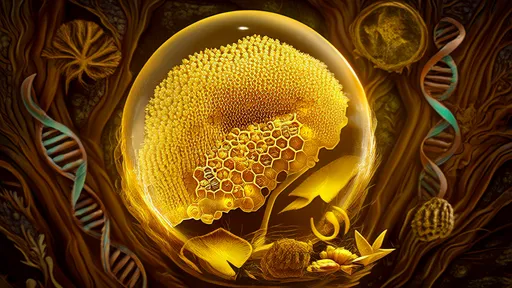
In a groundbreaking scientific endeavor, researchers have turned to an unexpected source to unlock the secrets of ancient ecosystems: microscopic pollen grains preserved in amber. The newly developed Eocene Pollen DNA Project has successfully extracted and sequenced plant DNA from 45-million-year-old fossilized tree resin, offering an unprecedented window into the composition of prehistoric forests. This remarkable achievement challenges long-held assumptions about the limits of DNA preservation while providing botanists with their first genetic blueprint of an entire vanished ecosystem.
The research team, comprising paleobotanists from the University of Oslo and geneticists from the Smithsonian Institution, developed a proprietary chemical process to dissolve amber without damaging the encapsulated pollen. "We're not just looking at pollen morphology under a microscope anymore," explains Dr. Ingrid Vestergaard, lead researcher on the project. "For the first time, we're reading the actual genetic instructions that built Eocene forests—this is like recovering the original architectural plans for a cathedral we've only known through weathered stones."
Initial findings from the Baltic amber deposits reveal surprising genetic continuity between ancient and modern plant lineages. Several species previously identified through fossilized leaf impressions show DNA profiles remarkably similar to contemporary relatives, suggesting evolutionary stasis in certain plant families. However, the data also uncovered completely novel genetic signatures belonging to extinct plant families with no modern descendants, their existence previously unknown to science.
One particularly startling discovery involves the chemical pathways responsible for floral scent production. The reconstructed genomes contain elaborate sequences coding for volatile organic compounds that would have created forest aromas dramatically different from anything experienced today. "These weren't just visual landscapes," notes Dr. Vestergaard, "but olfactory environments we can scarcely imagine—pine-like resins blended with tropical fruit esters and spicy phenolic compounds that would smell alien to modern noses."
The research carries profound implications for understanding climate change impacts on forest ecosystems. By comparing the Eocene genetic data with modern plant genomes, scientists have identified specific genes associated with heat tolerance and drought resistance that became inactive as global temperatures cooled. This molecular evidence supports theories about the thermophilic nature of Eocene flora while providing potential genetic targets for engineering climate-resilient crops.
Methodological breakthroughs extended beyond DNA extraction. The team developed novel bioinformatics tools to reconstruct partial genomes from fragmentary genetic material, adapting techniques originally designed for analyzing ancient human DNA. Their customized algorithms can distinguish between contamination from modern plant material and authentic ancient sequences—a persistent challenge in paleogenomics. These computational methods are now being adopted by researchers studying other types of fossilized organic remains.
Controversially, the study challenges the traditional "molecular clock" models used to date evolutionary divergences. Several plant families appear to have emerged much earlier than previously estimated based on mutation rate calculations. This discrepancy suggests either flaws in current dating methodologies or the existence of unknown mechanisms that slowed genetic mutation rates during certain geological periods—a finding that could rewrite aspects of evolutionary theory.
Practical applications extend beyond academic circles. Pharmaceutical researchers are particularly interested in the reconstructed biosynthetic pathways of Eocene plants, which may produce novel medicinal compounds. Early analysis has already identified genetic sequences similar to those used in modern cancer treatments, hinting at possible prehistoric origins for these therapeutic molecules. Biotechnology firms have begun licensing the genomic data to explore potential applications in agriculture and medicine.
The project hasn't been without its skeptics. Some researchers question whether the recovered DNA truly represents Eocene-era genetic material rather than later contamination. The team has addressed these concerns through rigorous testing protocols, including replication of results across multiple amber samples from different geological strata and locations. Independent verification by separate laboratories has confirmed the authenticity of several key sequences.
Looking ahead, researchers plan to expand the pollen database to include samples from other major amber deposits worldwide, particularly from the Dominican Republic and Myanmar. Future work may attempt to sequence DNA from other microfossils occasionally preserved in amber, such as fungal spores or plant pathogens. Such efforts could reveal entire prehistoric ecological networks, from soil microorganisms to canopy-dwelling plants.
As laboratory techniques improve, scientists speculate about eventually reconstructing complete Eocene plant genomes—an achievement that would enable unprecedented comparisons with modern flora. Some even discuss theoretical possibilities of "de-extinction" gardening, where ancient genetic traits could be reintroduced into contemporary plants. While such applications remain speculative, the very existence of readable DNA from the Eocene epoch has fundamentally altered what scientists consider possible in the field of paleogenetics.
The implications of this research extend beyond botany into broader questions about biological preservation and deep time. That delicate molecular structures could survive tens of millions of years within amber challenges assumptions about the durability of organic information. As Dr. Vestergaard reflects: "We're holding genetic messages from a world before ice ages, before the rise of grasslands, before modern ecosystems existed—and they still have things to teach us about life's resilience."
By /Jul 28, 2025
By /Jul 28, 2025
By /Jul 28, 2025
By /Jul 28, 2025

By /Jul 28, 2025

By /Jul 28, 2025

By /Jul 28, 2025

By /Jul 28, 2025
By /Jul 28, 2025
By /Jul 28, 2025

By /Jul 28, 2025
By /Jul 28, 2025
By /Jul 28, 2025
By /Jul 28, 2025
By /Jul 28, 2025
By /Jul 28, 2025

By /Jul 28, 2025
By /Jul 28, 2025

By /Jul 28, 2025
By /Jul 28, 2025